12
Nov
A silicone-look TPU label is a decorative label designed to create the raised, dimensional appearance commonly associated with silicone branding. Made with thermoplastic polyurethane (TPU) or other compatible transfer materials, this type of label can offer a flexible alternative for brands looking for distinctive logos, lettering, and decorative graphics.
With the development of digital printing technologies, UV-DTF printing has also attracted attention in the production of customized labels and decorative transfers. However, a silicone-look appearance does not necessarily mean that a label is made from genuine silicone, and not every UV-DTF printer or transfer material is suitable for TPU heat transfer applications.
In this guide, we explain what silicone-look TPU labels are, how UV-DTF transfers work, their advantages and limitations, and what manufacturers should consider when selecting printing equipment.
A silicone-look TPU label is a label made from thermoplastic polyurethane (TPU) or a compatible transfer material that is designed to resemble the appearance of a traditional silicone label.
These labels are often characterized by:
Unlike conventional flat printed labels, silicone-look TPU labels can create a more dimensional visual effect. Depending on the material formulation and production process, they may be used for clothing logos, sportswear branding, footwear decorations, bags, and other consumer products.
It is important to distinguish between appearance and material composition. A silicone-look TPU label is not necessarily made of silicone. Genuine silicone labels use silicone-based materials, while TPU labels use thermoplastic polyurethane. Their physical properties, production methods, and application requirements can therefore differ.
UV-DTF, or Ultraviolet Direct-to-Film printing, is a digital printing method in which UV-curable inks are printed onto a transfer film and cured using ultraviolet light.
A typical UV-DTF workflow includes several stages:
The logo, text, or graphic is prepared using design software. Manufacturers can adjust the artwork's dimensions, colors, outlines, and layout before printing.
The design is printed onto a compatible film using a UV printing system. Depending on the printer configuration and ink system, white ink and other color layers may be used to create the desired visual effect.
Ultraviolet light cures the ink during printing. This helps form the printed image on the transfer film.
The printed transfer is prepared for application. Depending on the specific production process, this may involve laminating, cutting, peeling, or other finishing operations.
The transfer is applied according to the requirements of the selected transfer system. Some processes use pressure-sensitive application, while textile heat transfer systems may require a compatible adhesive layer, controlled temperature, pressure, and application time.
Important: Conventional UV-DTF printing and TPU heat transfer label production are not automatically the same process. A UV-DTF printer, film, ink, adhesive, and application method must be compatible with one another. Manufacturers should confirm material compatibility and conduct application tests before starting mass production.
Although silicone-look TPU labels and genuine silicone labels may have a similar raised appearance, they are made from different materials and may perform differently.
| Comparison | Silicone-Look TPU Label | Genuine Silicone Label |
|---|---|---|
| Material | Thermoplastic polyurethane or compatible transfer materials | Silicone-based material |
| Appearance | Can imitate a raised silicone-style appearance | Traditional silicone appearance and texture |
| Production | May use digital printing or other compatible transfer processes | Often involves molding, dispensing, or other silicone-specific processes |
| Customization | Can support digital artwork customization, depending on the process | Customization depends on the mold and production method |
| Material Properties | Depends on TPU grade, formulation, and transfer construction | Depends on silicone formulation and curing process |
| Typical Applications | Apparel, sportswear, bags, footwear, and product decoration | Apparel branding, accessories, and products requiring silicone-specific properties |
There is no universal winner between the two options. The right choice depends on the desired appearance, flexibility, durability, production volume, material compatibility, and final application requirements.
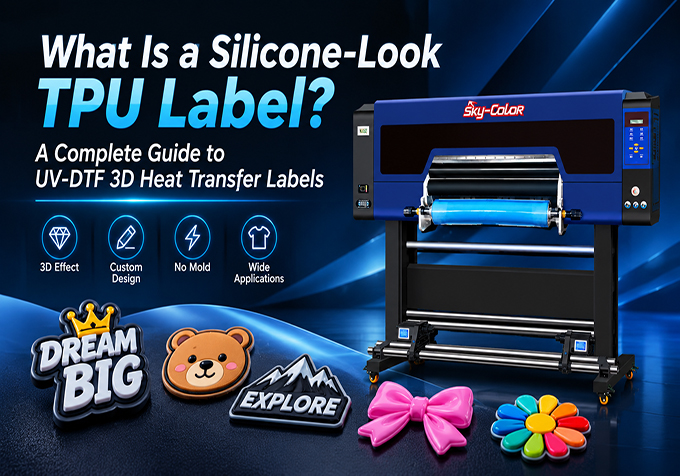
One of the main reasons brands choose silicone-look TPU labels is their dimensional appearance. A raised logo or graphic can make product branding more noticeable than a conventional flat print.
Digital artwork preparation allows manufacturers to customize graphics, colors, text, and shapes. This can be useful for brands that frequently update their logos or produce multiple product designs.
Depending on the selected manufacturing process, digital production methods can reduce reliance on traditional mold-based workflows for certain designs. This may be beneficial for customized orders, product samples, and smaller production batches.
Silicone-look TPU labels can be considered for various products, including sportswear, casual apparel, bags, footwear, and accessories. The final suitability depends on the material, application method, and required performance.
Despite their visual appeal, silicone-look TPU labels are not suitable for every application. Manufacturers should evaluate the following factors before selecting a production method.
TPU and silicone have different material characteristics. A TPU label may resemble silicone visually, but its softness, elasticity, surface feel, and flexibility will depend on its formulation and construction.
Successful application depends on compatibility between the label, adhesive layer, and target substrate. Different fabrics and surfaces may require different application parameters.
Labels used on clothing may be exposed to repeated washing, stretching, friction, and drying. Manufacturers should test washing durability, edge lifting, cracking, and color stability under realistic conditions.
Heat transfer materials have specific temperature, pressure, and dwell-time requirements. Excessive heat or incorrect application conditions may damage the transfer or the target material.
Not every UV DTF printer is designed for every TPU film or heat transfer process. Before purchasing equipment, confirm the supported ink types, film specifications, curing conditions, adhesive compatibility, and finishing requirements with the printer and material suppliers.
Choosing the right printer is an important part of establishing a reliable digital transfer production workflow. Manufacturers should consider more than printing width or advertised speed. The ink system, printhead configuration, curing system, media handling, and compatibility with the intended transfer materials all matter.
The printhead configuration affects printing performance, production capacity, and the available ink channels. Manufacturers should select a configuration that matches their production requirements.
A wider printing system may help manufacturers arrange multiple designs on one roll of film. However, actual productivity depends on print mode, artwork coverage, ink configuration, and production conditions.
UV ink compatibility and curing performance are important considerations. The printer, ink, and film must be designed to work together to achieve stable printing results.
Automatic roll feeding and rewinding can help improve workflow efficiency, especially for continuous roll-to-roll production.
For manufacturers planning to produce TPU heat transfer labels, printer specifications alone are not enough. They should request material tests and confirm that the complete process meets the required adhesion, flexibility, washing, and durability standards.
The SkyColor SF60-4 UV DTF Printer is a 60 cm roll-to-roll UV DTF printing system designed for UV DTF transfer production.
According to the product specifications, the SF60-4 can be configured with 3–4 Epson I3200-U1 printheads and supports a white, CMYK, varnish, and gloss-related ink configuration. Its automatic roll media handling and UV curing system are designed to support continuous transfer printing workflows.
Key product specifications include:
| Specification | Details |
|---|---|
| Model | SF60-4 UV DTF Printer |
| Printhead | EPSON I3200-U1 |
| Printhead Quantity | 3–4 |
| Resolution | Up to 3200 DPI |
| Print Width | 600 mm |
| Ink Configuration | W + CMYK + V + GV |
| Ink Type | UV Neutral and Hard Ink |
| Printing Speed | 4-pass Draft: 10.5 m²/h; 4-pass Fine: 8 m²/h; 6-pass Draft: 8.5 m²/h; 6-pass Fine: 6 m²/h |
| Print Media | AB Film, Plasma Film |
| Media Handling | Automatic Roll Rewinding and Unwinding |
| Heating System | Rubber Roller Heating |
| RIP Software | Maintop, RllN, PP, etc. |
| Color Management | ICC-based; Density and Curves Adjustment |
| Working Environment | Temperature: 18–30°C; Humidity: 35–65% |
| Power Supply | 110V/220V, 50Hz/60Hz, 10A |
| Dimensions | 1745 × 918 × 1480 mm |
| Weight | 262 kg |
The SF60-4 also features a white ink stirring and circulation system, an embedded temperature and humidity monitoring module, an ink shortage alarm, rubber roller heating, and an independent LED water-cooled UV curing system.
Material compatibility note: The SF60-4 is specified as a UV DTF printer. Its published specifications do not establish compatibility with every flexible TPU film, heat transfer adhesive, or silicone-look TPU label production process. If your intended application involves TPU heat transfer labels for textiles, contact SkyColor to confirm the suitable ink, film, adhesive, and application workflow before purchasing or starting production.
For more information, visit the SkyColor SF60-4 UV DTF Printer product page.
Silicone-look TPU labels and other dimensional transfer labels may be used in a variety of product categories, depending on the material and application requirements.
Before commercial production, manufacturers should test the label on the actual target material. Different fabrics, coatings, and surface treatments can affect adhesion and durability.
A silicone-look TPU label provides a way to achieve a raised, dimensional branding appearance without necessarily using genuine silicone. Its potential advantages include design flexibility, customized graphics, and applications across apparel, footwear, bags, and accessories.
However, material selection and production compatibility are essential. TPU labels, genuine silicone labels, and conventional UV-DTF transfers are different product and process categories. Manufacturers should evaluate the complete combination of printer, ink, film, adhesive, and application conditions rather than assuming that all UV DTF equipment can produce TPU heat transfer labels.
For businesses exploring roll-to-roll UV DTF production, the SkyColor SF60-4 UV DTF Printer is one system worth evaluating based on its published specifications and confirmed material compatibility.
No. Silicone-look TPU labels are generally made from thermoplastic polyurethane or compatible transfer materials. They are designed to resemble the appearance of silicone labels but are not necessarily made from silicone.
The term may refer to a TPU-related label or transfer produced using a UV-DTF workflow. However, conventional UV-DTF transfers and TPU heat transfer labels are not automatically the same. The specific film, ink, adhesive, and application process must be confirmed.
Digital printing workflows can reduce the need for traditional molds for certain designs. Whether a mold is required depends on the specific label material and production method.
Some compatible transfer systems are designed for textile applications. However, not every UV-DTF transfer is suitable for clothing. Manufacturers should verify fabric compatibility, adhesive performance, application conditions, and washing durability.
TPU labels use thermoplastic polyurethane, while genuine silicone labels use silicone-based materials. They can differ in flexibility, texture, heat resistance, production methods, and application performance.
Neither is universally better. The choice depends on the desired appearance, material properties, production volume, customization needs, application surface, and durability requirements.
UV DTF transfers are generally produced using UV DTF printers equipped with compatible UV inks, transfer films, and curing systems. The complete production workflow depends on the intended transfer application.
The SkyColor SF60-4 is a 60 cm UV DTF printer. Its published specifications describe UV DTF printing capabilities, but do not confirm compatibility with every TPU heat transfer film or silicone-look TPU label process. Contact SkyColor to verify the specific material, ink, adhesive, and application requirements before production.
Potential applications include sportswear, casual clothing, footwear, bags, backpacks, and fashion accessories. Actual suitability depends on the label construction and target material.
Manufacturers should test adhesion, flexibility, stretching, washing durability, abrasion resistance, temperature resistance, edge lifting, and color stability under realistic production and use conditions.
SkyColor provides UV flatbed and roll-to-roll printing solutions for a wide range of printing applications. Contact our team to discuss your materials, sample testing requirements, and production goals.
Email: sale@skycoloruv.com
WhatsApp: +86 177 0063 9356
Website: www.skycoloruv.com


